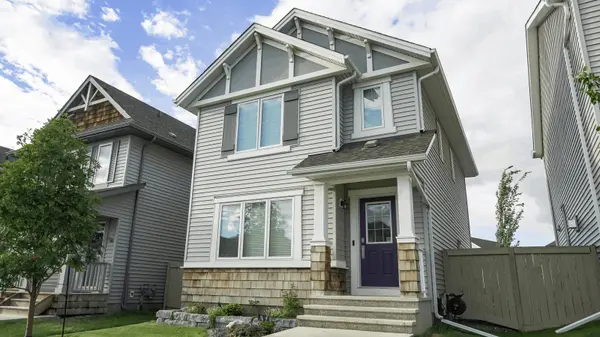
Why Did My Mortgage Payment Jump? Property Tax Abatements & Exemptions in 10 Boston-Area Communities
Has your mortgage payment gone up lately? You're not alone, and the cause usually isn't your loan. Property taxes rose, and many escrow accounts came up short. Your lender then raises your monthly payment to cover the gap.
The bigger risk is a tax bill that never gets paid. If no one pays it (for example, the escrow is short, the lender doesn't pay it in full, or you have no escrow at all), the unpaid tax becomes a lien on your home. In Massachusetts, a town gets a lien automatically when it assesses the tax. If the bill goes unpaid, the town can record a "tax taking" at the Registry of Deeds and eventually foreclose (Mass. Land Court). Unpaid balances in tax title carry 16% interest (Town of Belmont). Some owners only find out when they refinance or sell.
The good news: you can check, and you can often lower the bill, if you know the right words and the right dates.
In Boston, the residential exemption alone is worth up to $4,353.74 a year for FY2026, or about $363 a month (City of Boston). If you bought recently and haven't filed, that money may be sitting on the table.
Why your payment jumped (and why it may not keep climbing)
Three things usually drive a sudden escrow jump:
- The seller's exemption came off. Many sellers had the residential exemption. Once you buy, it drops until you apply. Your lender re-runs escrow on the higher bill and adds a catch-up for the shortfall.
- The tax rate went up. Boston's residential rate rose from $11.58 to $12.40 per $1,000 for FY2026, largely because commercial values fell while home values rose (GBH News).
- Escrow shortages get spread over 12 months. A one-time catch-up can make the jump look bigger than your real tax increase.
Here's the part most people miss. Massachusetts towns don't just pick a rate. Proposition 2½ caps how much total tax (the levy) a town can raise, generally 2.5% a year plus new growth (Mass. DLS). The rate is simply that levy divided by total assessed value. So when values fall, the rate goes up, and when values rise, the rate goes down. In FY2026, 230 communities lowered their residential rate and only 109 raised it.
That's why you shouldn't multiply a new, higher rate by your current assessment and panic. Rates and assessments move together. When the new assessments come out, the actual bill is usually a smaller jump than that back-of-napkin math suggests.
Two words worth knowing: exemption and abatement
Residential exemption (often called a homestead exemption). In cities that adopt it, owner-occupants are taxed on a reduced value. Boston and Chelsea offer it among the towns below. Boston's FY2026 exemption removed about $351,000 of value from taxation (City of Boston). Chelsea's removed $279,066, worth $3,203.68 in tax (Chelsea Assessors). It's a flat amount, so it helps most on modest-priced homes.
Abatement. If you believe your home is assessed above what it would sell for, you can ask the assessors to lower it. The application is due on the due date of the first actual tax bill, usually February 1 in towns that bill quarterly (Secretary of the Commonwealth). Miss it and you lose the right for that year. You still pay your bills while it's reviewed.
What a recent buyer should do, and when
- Late December 2026: Your third-quarter "actual" FY2027 bill arrives. It shows your assessed value and the new rate.
- By February 1, 2027: File an abatement if your assessment looks too high. Bring recent comparable sales.
- By April 1, 2027: File for the residential exemption in Boston or Chelsea, plus any personal exemptions (seniors, veterans) you qualify for.
Boston buyers get a new break this year. Under a home rule petition, owners who recorded a deed and moved in between January 1 and June 30, 2026 may qualify for the FY2027 exemption. Before, you had to own and live there by January 1 (City of Boston). If you closed in the first half of 2026, check this now.
Tax rates, exemption savings and deadlines in 10 communities
An owner-occupant buying at the median price in Boston or Chelsea can cut the yearly tax bill by $3,200 to $4,350 with the residential exemption. The other eight towns don't offer it, so abatement and personal exemptions are the tools there.
| Community | Median single-family sale price, Jan–Oct 2026 | FY2026 residential rate (per $1,000) | Est. yearly tax at median price | Residential exemption savings (FY2026) | Est. yearly tax after exemption | Monthly savings | FY2027 abatement deadline | FY2027 exemption deadline |
|---|---|---|---|---|---|---|---|---|
| Boston (citywide) | $866,000 | $12.40 | $10,738 | $4,353.74 | $6,385 | $363 | Feb 1, 2027 | Apr 1, 2027 |
| East Boston | $715,000 | $12.40 | $8,866 | $4,353.74 | $4,512 | $363 | Feb 1, 2027 | Apr 1, 2027 |
| Dorchester | $755,000 | $12.40 | $9,362 | $4,353.74 | $5,008 | $363 | Feb 1, 2027 | Apr 1, 2027 |
| Chelsea | $670,500 | $11.48 | $7,697 | $3,203.68 | $4,494 | $267 | Feb 1, 2027 | Apr 1, 2027* |
| Winthrop | $815,000 | $11.14 | $9,079 | Not offered | $9,079 | — | Feb 1, 2027 | Apr 1, 2027 (personal exemptions) |
| Revere | $659,500 | $8.94 | $5,896 | Not offered | $5,896 | — | Feb 1, 2027 | Apr 1, 2027 (personal exemptions) |
| Quincy | $759,000 | $11.78 | $8,941 | Not offered | $8,941 | — | Feb 1, 2027 | Apr 1, 2027 (personal exemptions) |
| Peabody | $715,000 | $9.47 | $6,771 | Not offered | $6,771 | — | Feb 1, 2027 | Apr 1, 2027 (personal exemptions) |
| Marblehead | $1,129,000 | $8.56 | $9,664 | Not offered | $9,664 | — | Feb 1, 2027 | Apr 1, 2027 (personal exemptions) |
| Lynn | $582,500 | $10.30 | $6,000 | Not offered | $6,000 | — | Feb 1, 2027 | Apr 1, 2027 (personal exemptions) |
How we did the math: median sale price ÷ 1,000 × FY2026 residential rate, minus the exemption where offered. This assumes your assessment equals the sale price; assessments often run lower, so your bill may be smaller. Rates are the latest state-certified FY2026 rates (Mass. DLS data via Fyts); FY2027 rates are being set now and will appear on December bills. Sale prices are year-to-date medians from the Massachusetts Association of REALTORS®; East Boston and Dorchester single-family samples are small (7 and 25 sales), and condo medians there were $629,950 and $599,500. Abatement is due with the first actual bill, February 1 when actual bills go out by December 31; it moves to May 1 (or 30 days after mailing) if bills go out later (Mass. DLS). *Chelsea's exemption is due April 1 or three months after actual bills are mailed, if later. Always confirm the date printed on your own bill.
Before you buy, do the math
Homeownership comes with more expenses than you might think. Before you buy, look at what it costs to own the home and what it could cost to sell if your plans change. Know how you'd get out before you get in.
Ask for the seller's current tax bill and check whether it includes an exemption you won't have on day one. Budget for the full bill, then file for every exemption you qualify for. Put February 1 and April 1 on your calendar now.
Buying soon, or wondering why your payment went up? Call or text Nicole Bettano at 781-330-9064. We're happy to help you work through the numbers.
Living Coastal – Greater Boston and North Shore · 82 Jefferson St, Winthrop, MA 02152 · Real Broker MA, LLC
This post is general information, not tax or legal advice. Confirm deadlines and eligibility with your local assessors.
Sources
- City of Boston – How to file for a residential exemption (FY2027 rules, deadline, new-buyer expansion)
- City of Boston – FY2026 Residential Exemption brochure
- City of Boston – FY2027 Residential Exemption brochure
- Chelsea Board of Assessors – FY2026 residential exemption and rates
- Chelsea – FY2026 Residential Exemption application
- Town of Winthrop – Abatement information
- City of Lynn – Abatements and overvaluations
- Mass. Land Court – The tax lien foreclosure process
- Town of Belmont – Tax title process
- Mass. Division of Local Services – FY2026 tax levies, assessed values and tax rates
- Mass. Division of Local Services – Property tax abatements (deadline rules)
- Secretary of the Commonwealth – Property tax abatements
- Fyts – Massachusetts property tax rates (DLS Tax Rates by Class, retrieved Oct 30, 2026)
- GBH News – Boston City Council approves increased tax rates (Dec 11, 2025)
- Massachusetts Association of REALTORS® Local Market Updates, October 2026: Boston · East Boston · Dorchester · Chelsea · Winthrop · Revere · Quincy · Peabody · Marblehead · Lynn
Categories
Recent Posts